Does a dopamine detox actually work? What the science says
Search "dopamine detox" and you get a familiar promise: take a day, a weekend, sometimes a full week, cut out everything stimulating, and your brain resets. No phone, no junk food, no music, no fun. Sit with the boredom. Come out the other side with a clean reward system and a fresh appetite for hard things.
It is one of the most popular self-improvement ideas of the last few years. It is also half right and half nonsense, and the half that is nonsense is the part most people fixate on.
Here is what actually holds up.
You cannot detox dopamine
Start with the name, because the name is the source of most of the confusion.
Dopamine is not a toxin. It is a neurotransmitter your brain uses constantly: for movement, for motivation, for learning, for deciding what is worth your attention. You do not have too much of it sitting around that a detox flushes out. You cannot drain it, and you would not want to. A brain low on dopamine is not a calm, focused brain. It is a brain that cannot get off the couch.
The term itself is misleading by accident. The clinical psychologist who popularized "dopamine fasting," Dr. Cameron Sepah, never meant it literally. His version was a stimulus-control technique borrowed from cognitive behavioral therapy: deliberately reduce the impulsive behaviors that have gotten out of hand, so they stop running on autopilot. The internet took the phrase, dropped the nuance, and turned it into a quasi-mystical brain cleanse.
So when someone says a detox "resets your dopamine," the literal claim is wrong. But there is a real mechanism underneath, and it is worth understanding because it tells you which version of the detox is worth your time.
What the science actually supports
The real story is about sensitivity, not quantity.
Your reward system adapts to whatever you feed it. When you flood it with cheap, frequent stimulation, short-form video, constant notifications, engineered snacks, the system downregulates. It gets less responsive. Receptors that respond to dopamine become less sensitive when stimulation is chronic and high. This is the same broad principle behind tolerance: the more you get, the more you need to feel the same thing.
The flip side is the part that matters. Reduce the cheap, frequent stimulation, and sensitivity recovers. Things that felt flat start to register again. A walk feels like something. A hard workout produces an actual signal. A focused hour of work feels rewarding instead of grim. You did not add dopamine. You restored the system's ability to respond to the dopamine that earned inputs already produce.
That recovery is what people are really chasing when they talk about a reset. And it is real. What is not real is the timeline. There is no switch that flips after 24 hours. Sensitivity shifts over days and weeks, not a single dramatic afternoon of staring at a wall. For more on the underlying concept, see what a dopamine baseline actually is and how to raise it.
Where the detox gets it right
Strip away the bad science and there is a solid core: cutting cheap inputs works.
If you spend a week off short-form video, off the constant phone checking, off the snacking every ninety minutes, your reward system does start to recalibrate. The constant low-grade stimulation was holding your sensitivity down, and removing it lets the floor come back up. People who do this report the same thing: boredom returns, and so does the ability to enjoy ordinary things.
This is genuine, and it is why the detox idea refuses to die despite the wrong label. The instinct, less cheap stimulation, is correct. The mechanism, restored sensitivity, is real. If all you take from the trend is "I should drastically cut my cheap inputs for a while," you will benefit.
Where it stops working
The detox has two failure modes, and almost everyone hits both.
The first is that it is subtraction without addition. A detox removes the cheap inputs but does nothing to add the earned ones. Your baseline rises a little from reduced stimulation, but it rises much further when you replace the cheap hits with hard, earned inputs: training, cold exposure, focused work, early light. Removing the scroll leaves a hole. What you put in that hole determines whether the reset holds. We went deep on this in the dopamine reset after sobriety, where the same trap shows up after quitting alcohol.
The second is that it is a finite event. You do the weekend. You feel better. Then Monday comes and the phone is right there and within a week you are back where you started. A detox is a retreat, not a practice. It has an end date built in, which means the gains have an expiration date too. The reset is real while it lasts and gone shortly after, because nothing changed about how you operate day to day.
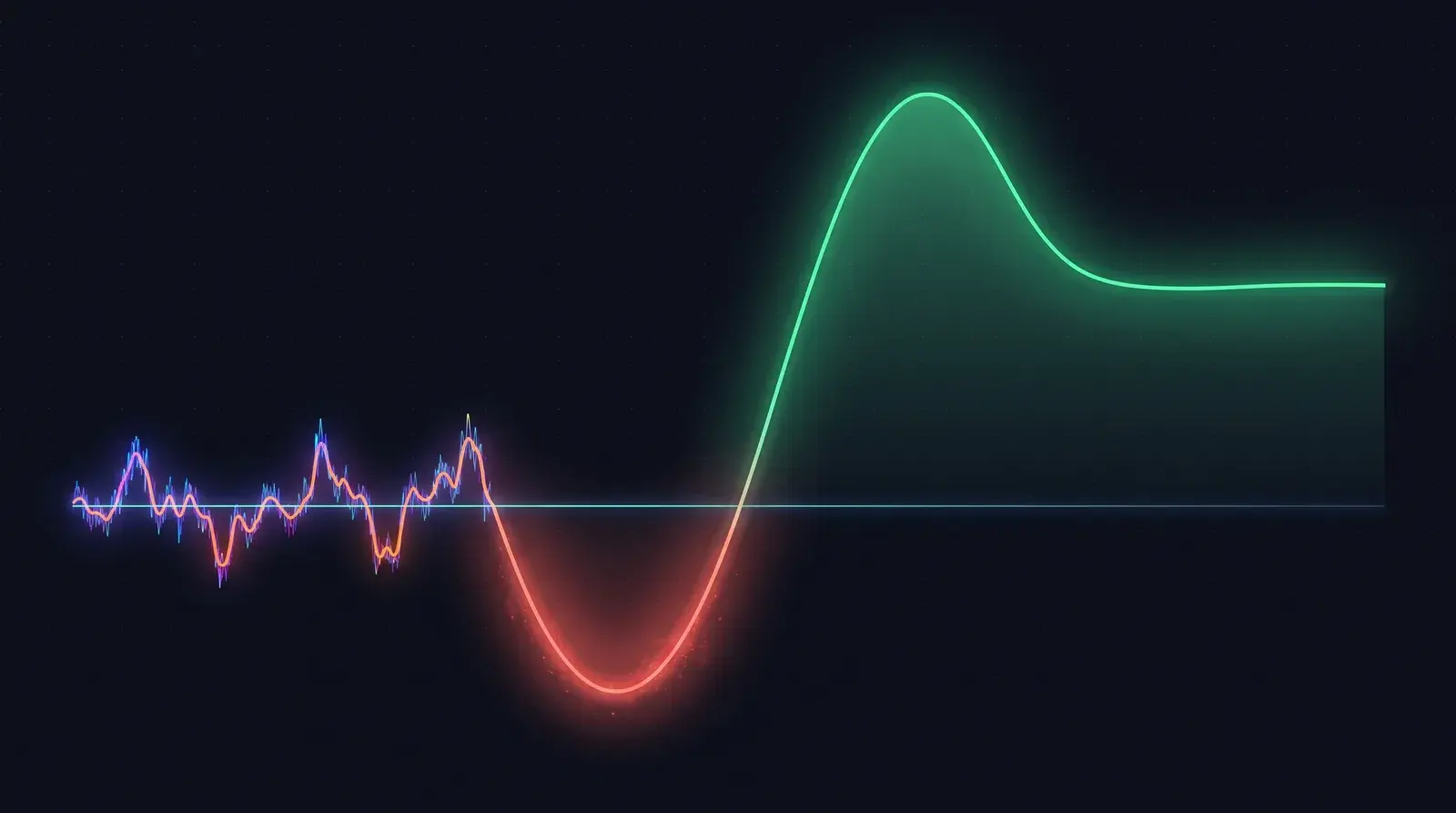
A detox, in other words, is a spike. And the whole problem with cheap dopamine is that spikes do not move the floor. Only the trend does.
What works better than a detox
The thing that actually moves your baseline is not a one-time purge. It is a daily accounting that never ends.
Instead of cutting everything for a weekend and hoping it sticks, you track two columns every day. On one side, builds: the hard, earned inputs the easy version of you would skip. On the other, drains: the cheap hits. Each carries a weight. At the end of the day they collapse into one net number. Positive means you built more than you drained. Negative means the cheap stuff won.
This is the build vs drain method, and it fixes both of the detox's failure modes at once. It is not subtraction without addition, because the build column is half the equation. And it is not a finite event, because there is no end date. You are not white-knuckling a deprivation period. You are keeping an honest daily ledger, indefinitely.
The difference shows up in the trend. One good day is noise. A weekend detox is one good weekend. Thirty net-positive days in a row is a baseline genuinely rising, and that is the thing a detox can gesture at but never deliver.
How to actually run a reset
If you want the real version of what a detox promises, here is the practice.
Pick one cheap input you will cut today. Not all of them, not forever. One, today. Then pick one earned input you will add: a training session, a cold shower, twenty minutes of focused work with the phone in another room. Log both.
On Baseline, that log resolves into your net number for the day. Do it again tomorrow. Watch the trend over a week, then a month. The streak tracks how many days in a row you held your target. The rank, which only ever climbs, records the total days you held the line: Soft, Iron, Steel, Tungsten, Titanium, Carbon, Diamond. If you want a time-boxed version that feels closer to the classic detox, the "No Cheap Dopamine" protocol is exactly that: seven days, no drains, none, but with the build column still running so the reset has something to stand on.
That is the part the weekend detox skips. The cut is easy to start and easy to abandon. The ledger is what makes the change survive contact with Monday.
The bottom line
Does a dopamine detox work? The literal version, the one that claims to flush a chemical and reset your brain in a day, does not. The mechanism behind it, reducing cheap stimulation so your reward system regains sensitivity, is real and worth using.
But a detox is a spike, and spikes fade. If you want the floor to actually rise, you need the part the detox leaves out: earned inputs added back in, tracked daily, with no end date. Subtraction gets you a good weekend. Subtraction plus addition, held consistently, gets you a higher baseline.
If you are still in the sobriety phase, that fight comes first: alcohol is too loud for any dopamine reset to register underneath it. Sober Tracker is built for that one. Once you are through it, the ledger is ready, and it works better than any detox.