How to lock in: what it means and how to actually do it
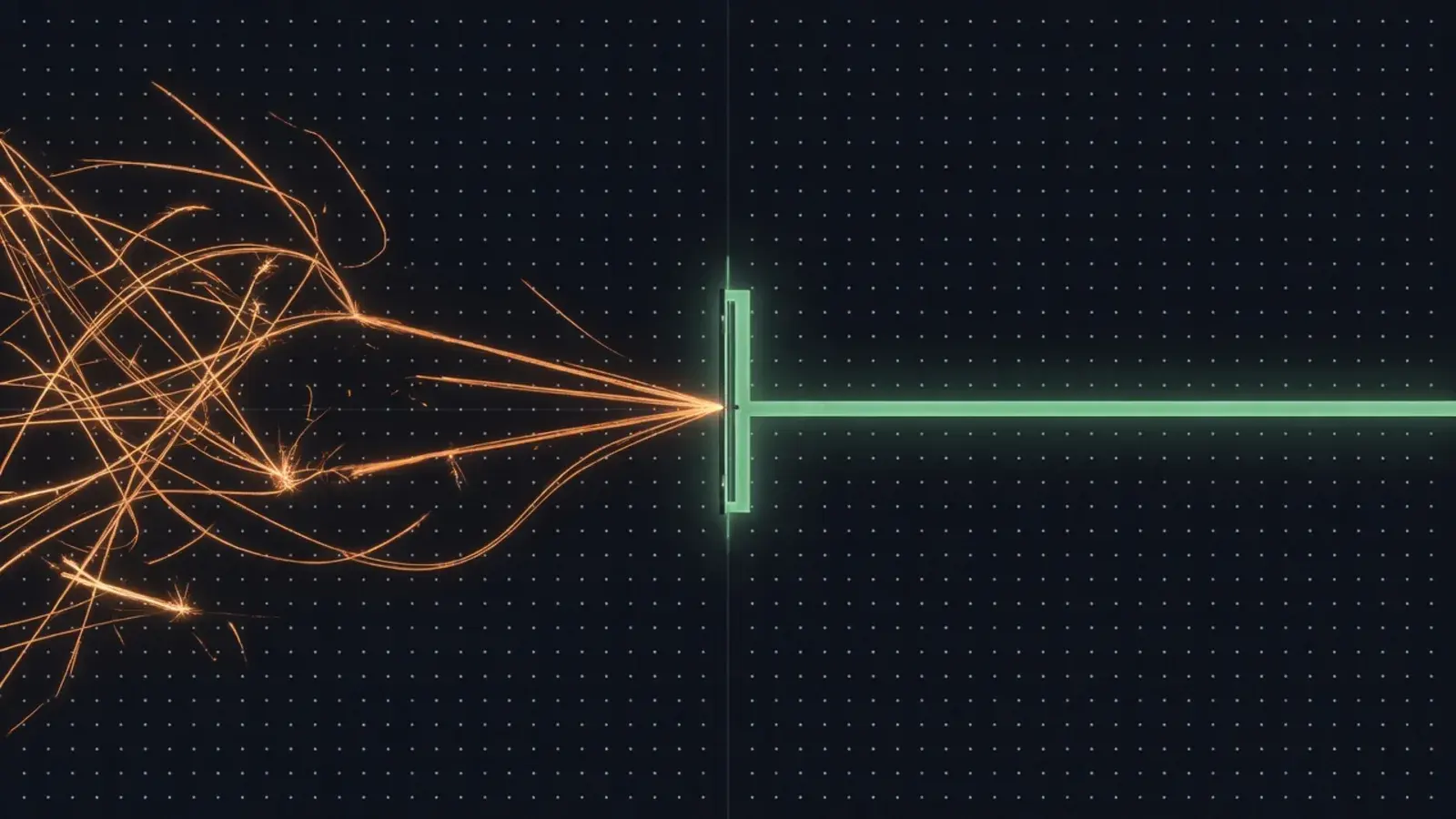
You said you were going to lock in tonight. You said it out loud, or in a group chat, or just in your head with the same conviction you had last Tuesday. Then you sat down, opened the laptop, and twenty minutes later you were in a feed you do not remember opening. The vow was real. The lock was not.
"Lock in" is Gen Z slang for entering a state of deep, uninterrupted focus and actually finishing the thing. It spread because it names a feeling people already wanted: the version of you who is done negotiating, who has one task, who does not come up for air until it is done. The problem is that most people treat lock in as a mood they wait for. Moods do not lock. Systems do.
Here is what lock in actually means, why the vibe dies at minute twenty, and how to lock in without needing to feel like a different person first.
What "lock in" actually means
When Gen Z says lock in, they do not mean a 90-day retreat and they do not mean a personality transplant. They mean: pick one target, cut the exits, and stay with it past the first wave of restlessness. School, a workout block, a project, the rest of the year. The phrase is newer than the mechanism. The mechanism is old: one task, a closed door, and no second screen.
That is why the slang caught on. Motivation is weather, and "I feel ready" is a forecast, not a plan. Lock in is the opposite claim. It says the decision is already made, so the next hour does not get a vote. Used honestly, it is closer to self-discipline as a system than to a grindset caption.
Used badly, it is a costume. You announce you are locking in, you buy a new notebook, you rearrange the desk, you watch three videos titled "how to lock in," and then you check the phone "just for a second." The identity of being locked in is cheaper than the work of staying locked. The identity is also what most of the internet is selling.
So strip the branding. Lock in is a protected session. It has a start, a single object of attention, a closed set of exits, and an end you choose. It is not a season, not a vibe, and not proof you have finally become serious. It is a block you can run tonight, at the length you can actually hold.
Why it lasts twenty minutes
The first minutes of a lock usually feel fine. Novelty is doing the work: new playlist, clean desk, the little hit of having declared yourself. Then the itch arrives. The document is still hard. The reward has not shown up. Your hand already knows where the phone is.
That itch is not a character flaw. Years of cheap dopamine trained your reward system to expect a hit on a short cycle. When the hits stop, the floor drops, and ordinary effort starts to feel like deprivation. Focus was trained toward switching, so minute four of a single task is not a test of willpower. It is the first rep of a movement you barely practice.
A quick check looks cheap. It is not. Attention residue means part of you stays with the thing you just opened, and the lock has to be rebuilt from scratch. Six "just a second" unlocks do not leave you with a slightly leaky session. They leave you with six shallow restarts and a tired feeling you will later call proof that you cannot lock in.
This is also why the cinematic version fails. People try to lock in for six hours on day one, the way the videos do it. The session is sized for the most motivated version of you, and that version is not the one who has to sit through minute twelve. Consistency is a floor, not a performance. A lock you finish at twenty-five minutes beats a lock you abandon at ninety, every time, because the finished one is the one your nervous system files as "this is a thing I do."
Lock in is not monk mode
The internet keeps stacking these words as if they were the same product. They are not.
Monk mode is a season: weeks of cuts and protected blocks, a temporary wall of rules. Useful, when you actually finish it, and rented, because the wall comes down on a date. Lock in is a session. You can run one this afternoon without quitting group chats or disappearing for 90 days. Confusing the two is how people either overcommit (I am locking in for the rest of the year) or undercommit (I will lock in when my life is quiet enough to go monk).
If you need a season, run a season, the humane version, and keep a ledger so one bad Saturday does not void the rest. If you need to finish today's work, you need a lock, not a lifestyle. Most of the people asking how to lock in are asking for the session and getting sold the season.
How to lock in without waiting to feel it
Four moves. All of them happen before the session starts, because the person inside the session is the one who negotiates.
1. Name one object. Not "be productive." Not "get my life together." One file, one set of problems, one workout, one chapter. If you cannot say the object in a short sentence, you are not locking in, you are hoping a mood will sort the pile for you. Write the sentence down. That is the lock's target. Everything else is an unlock.
2. Close the exits in advance. Phone in another room, not face down on the desk. Extra tabs gone. Notifications off. Full screen on the one thing. Lock in fails at the environment more often than at the will: the unlock is sitting within reach, and a trained reflex does not ask permission. You are not becoming someone who ignores the phone. You are arranging for the reflex to have nowhere to land, the same way you would raise the price of a drain instead of promising to be stronger around it.
3. Survive the first ten minutes on purpose. That is where the fake lock dies. The itch will show up, usually before the work has even gotten hard. Let it peak. Do not answer it. The wave passes if nothing feeds it, often inside a minute or two. The people who "can lock in" are not people the itch skips. They are people who have practiced not scratching. If ten minutes is currently the honest ceiling, the lock is ten minutes, completed, and it counts. Stretch it later, the way you would stretch any training load.
4. End on a timer, not a crash. A lock with no end becomes a test of how long you can suffer, and suffering is a terrible teacher. Set the stop before you start: 25 minutes, 45, whatever you can hold cleanly. When it rings, stop, even if you could squeeze more. Ending on purpose teaches the system that the lock finishes and pays. Ending because you unlocked to check a message teaches the opposite.
ADHD comes up here constantly, and for a reason: a brain that hunts novelty will feel the itch sooner and louder. The structures above still apply, because they reduce switching rather than asking you to feel more disciplined. They are not a diagnosis and they are not treatment. They are the same floor anyone else is building, sized to the day you actually have.
Make the lock a number
The reason lock in stays a vibe is that a session leaves no residue you can see. You either "had a good night" or you did not, and the story you tell about it is usually kinder or crueler than the hours were. Invisible work is the kind you abandon.
This is what Baseline is built for. Each lock you complete goes in the build column. Each unlock, the scroll, the "quick check" that ate the block, goes in the drain column. The day collapses into one net number: did you fund the lock, or the exits? A twenty-five-minute session on a bad day still lands on the right side of the ledger. A streak would have scored that day a zero. The rank only climbs, which is the right scoreboard for a practice that is allowed to contain a leaky afternoon.
You stop asking "did I lock in today" as if it were a personality test. You ask whether the number is positive. One of those questions has an answer.
Where to start
Do not lock in for the rest of the year. That is a season you have not designed.
Tonight: one object, written down. Phone in another room. A timer you can actually finish. When the itch arrives, let it pass once. Log the session as a build, log the unlocks you took, and look at the number.
Then tomorrow, the same lock, not a bigger identity. Lock in was never a feeling some people get and you do not. It is a closed door, a single task, and a first ten minutes you have decided not to negotiate. You can run that tonight, at a length that would look almost embarrassing on a thumbnail, and that is the version that holds.